
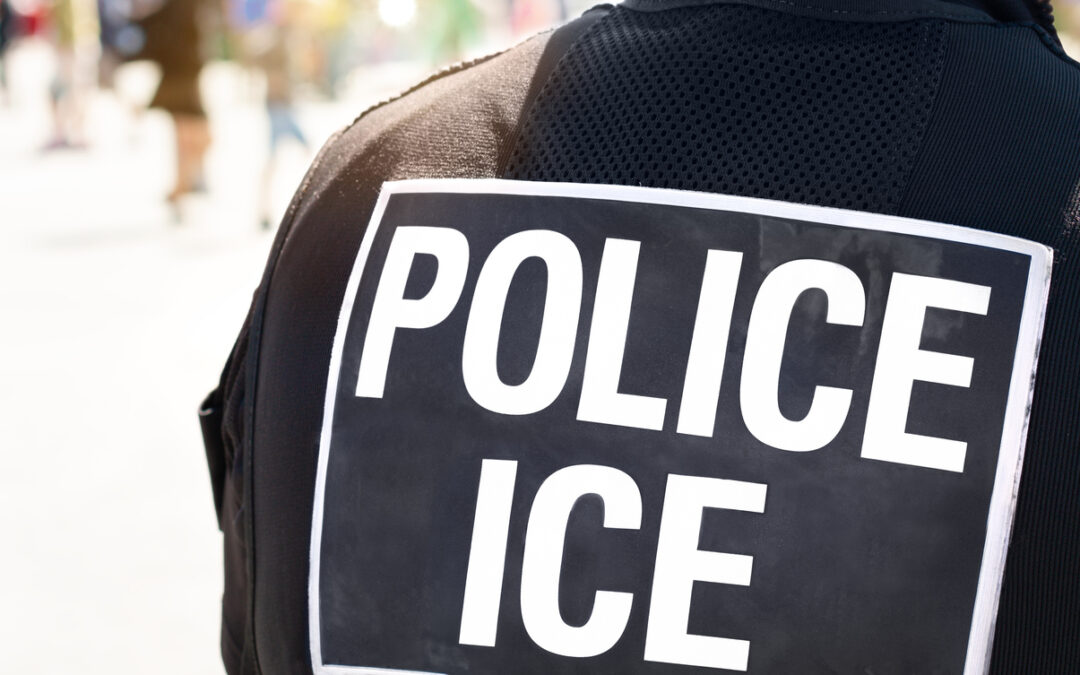
In times of disruption—whether it’s a government shutdown or staffing shortages—it’s natural for policymakers to look for quick fixes. One proposal that has surfaced and is being deployed is for ICE agents to supplement or replace TSA officers at airport checkpoints.
On the surface, it sounds like a numbers problem: fewer TSA officers, bring in more federal agents.
In reality, it’s a mission problem.
Presently, DHS has stated that ICE personnel will not be involved in core screening functions. Instead, they may support areas like passenger divestiture (removing laptops and liquids), staffing sterile area exit lanes, assisting with line queue management, and conducting travel document checks.
If ICE is limited to those roles, they may be able to improve security line flow to some extent. How much? We don’t know yet.
However, the president’s initial announcement suggested ICE could also take on immigration enforcement responsibilities inside the airport environment. That’s where the concern begins.
Will ICE agents begin pulling passengers out of line for questioning, similar to how individuals are screened when entering the country? Will travel document checks evolve into higher levels of interrogation more consistent with a border crossing? At this point, none of that has been clearly defined.
But if immigration enforcement processes are introduced into the checkpoint environment, expect delays—and not minor ones. You’re now layering a slower, investigative process into a system that is designed for speed and throughput. That combination will back lines up quickly and put additional strain on the entire U.S. air transportation system.
The challenge is that security and transportation are always in tension. Security is meant to slow things down. Air travel is designed to move people quickly. It’s a constant push-pull between two necessary forces. If we apply too much security in the wrong way, we risk undermining the very benefit of air travel itself. Using ICE in an enforcement capacity at airport checkpoints could do exactly that.
TSA and immigration enforcement operate under fundamentally different objectives. TSA’s role is straightforward: identify threats to aviation. That means weapons, explosives, and prohibited items that could bring down an aircraft or endanger passengers. The system is built for speed, consistency, and throughput—screening millions of passengers a day while keeping the lines moving.
ICE and Border Patrol operate in a completely different space. Their mission is to determine who you are, whether you belong in the United States, and whether further investigation or detention is necessary. That involves questioning, interrogation, and enforcement authority—including the ability to detain and arrest.
Those two missions don’t just differ—they conflict at the checkpoint.
When you introduce immigration enforcement into a system designed for rapid screening, you create friction. Questioning increases. Secondary inspections increase. Detentions become possible. And every one of those actions slows down a process that is designed to move efficiently.
The result isn’t just inconvenience—it’s system-wide disruption.
Airport security is not just about screening. It’s about operating within a live transportation network. Early in TSA’s history, there was an assumption that screening effectiveness mattered more than how the system functioned. We learned quickly that if you sacrifice throughput, you don’t strengthen security—you introduce new risks. If you slow the checkpoint down enough, you don’t just create long lines—you create risk. Hundreds, sometimes thousands, of passengers backed up in unsecured areas become a target themselves. That’s a vulnerability aviation security has spent decades trying to reduce.
Training is another critical factor that cannot be overlooked. TSA officers undergo weeks of initial training just to operate carry-on screening equipment, followed by supervised, on-the-job experience. Proficiency takes time. Even with accelerated training, new personnel process bags more slowly and are more prone to missing subtle indicators.
This isn’t a role you can simply plug someone into.
There’s also the issue of focus. TSA officers are trained to ignore many things that other federal agents are trained to pursue. For example, TSA is not looking for narcotics in the same way border agents are. They are not stopping passengers to verify prescription medications in pill cases. If they did, checkpoints would grind to a halt.
ICE agents would have to be retrained not just in what to look for—but what to ignore. That’s a significant shift in mindset and operational behavior.
And then there’s the passenger experience.
Air travelers in the United States are not crossing an international border. They do not expect to be interrogated about their identity or legal status at a domestic checkpoint. Introducing that level of scrutiny changes behavior. It increases tension, complaints, and confrontation. It may even discourage people from flying altogether.
Aviation security is not just about enforcement—it’s also about maintaining public confidence in the system.
Finally, there are unanswered questions about command and control. TSA operates under a defined structure led by Federal Security Directors at each airport. ICE agents have their own chain of command, performance metrics, and operational priorities. Without clear authority and alignment, you risk confusion at the checkpoint—something you cannot afford in a security environment.
The bigger concern is that we are trying to solve the wrong problem.
The current strain on the system is not due to a lack of law enforcement capability—it’s due to workforce instability. TSA officers are working without pay, calling out, or leaving altogether. That creates a cascading effect: fewer officers, longer lines, increased fatigue, and reduced effectiveness.
Adding ICE agents doesn’t fix that.
It introduces new complexity into an already stressed system.
If conditions continue to deteriorate—if wait times stretch into hours and airports begin to shut down operations—the economic and security consequences will force action. But that action needs to address the root issue: stabilizing the TSA workforce and maintaining the integrity of the aviation security mission.
Because at the end of the day, aviation security isn’t about doing “more.”
It’s about doing the right things, in the right way, for the system we’re trying to protect.